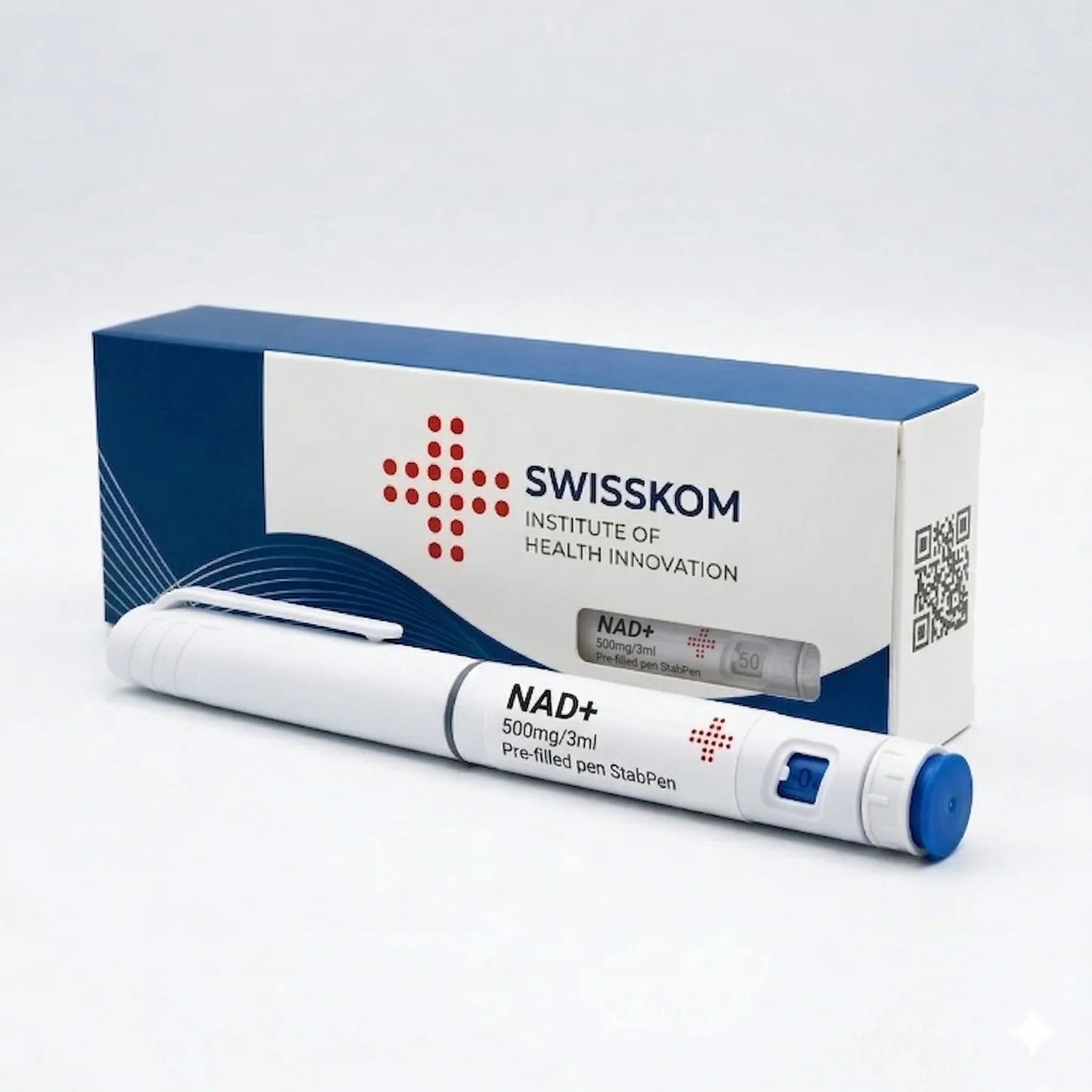
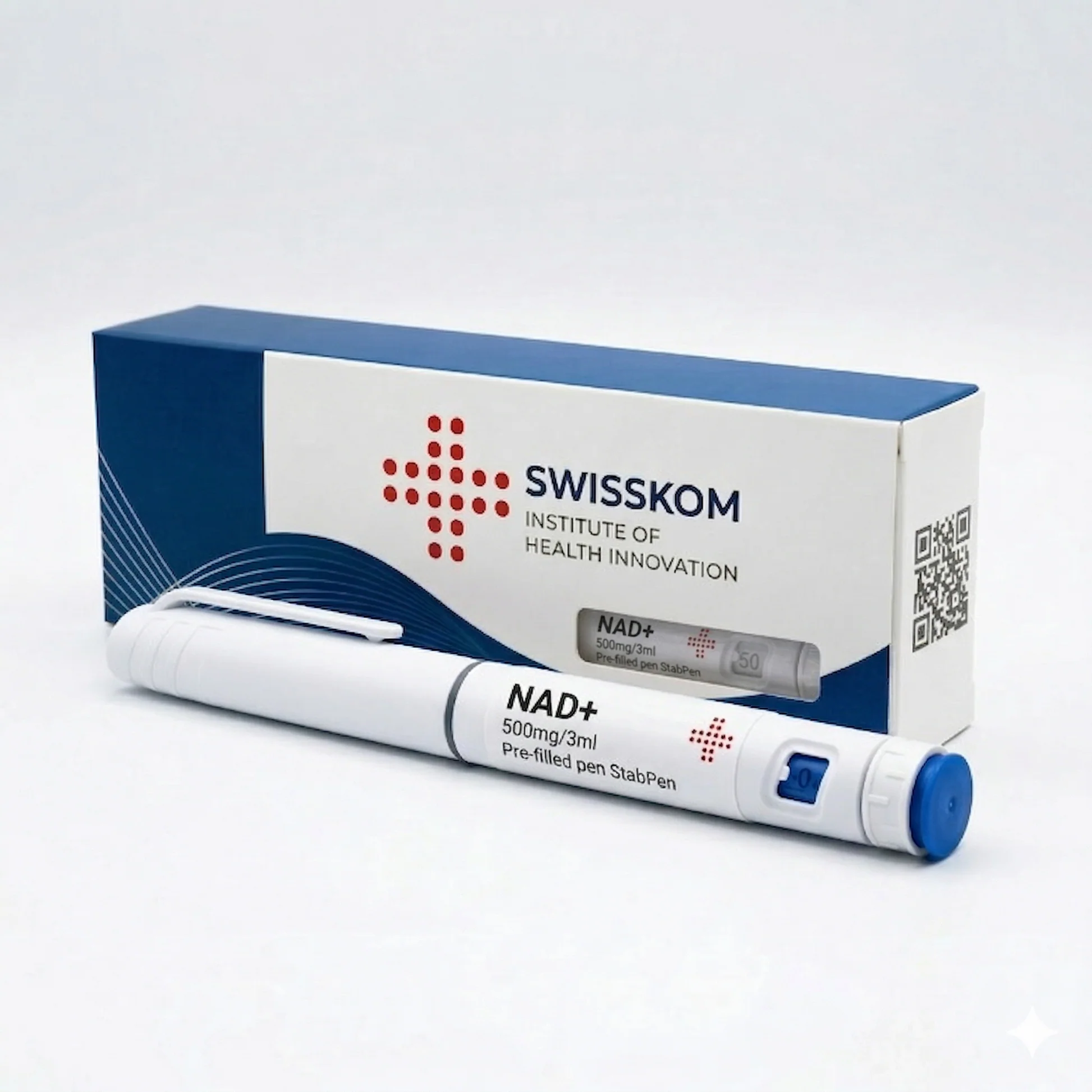
NAD+ (Nicotinamide) | 500mg/1000mg
NAD+ (Nicotinamide) | 500mg/1000mg
- 500mg
- 1000mg
- StabPen™
- ≥99% Pure
In stock
Show full details
Cellular energy

Sirtuin activation

DNA repair

Mitochondrial function

Anti-aging research

Metabolic health
NAD+ is a fundamental coenzyme in redox reactions and a substrate for SIRT1-7 deacetylases, PARP enzymes and CD38 ectoenzymes. Its decline with age makes it a central target in longevity research.
DOSAGE
- Preloaded StabPen™ with calibrated units
- Each 1 unit contains 1.67mg (500mg) - 3.33mg (1000mg) of active ingredient
- Total units: 300
MECHANISM OF ACTION
NAD+ serves as an electron carrier in glycolysis and the citric acid cycle. As a substrate of SIRT1-7, it enables deacetylation of histones. PARP1 consumes NAD+ in DNA repair, linking energy metabolism to genomic integrity.
RESEARCH APPLICATIONS
- Sirtuin pathway studies and epigenetic regulation
- Investigation of DNA repair mechanisms (PARP activation)
- Modeling mitochondrial bioenergetics
- Studies of NAD+ depletion and aging
What is NAD+?
NAD+ (nicotinamide adenine dinucleotide) is a coenzyme that is found in all living cells and is involved in many basic biochemical processes. It has a central role in redox reactions, cellular energy metabolism and the work of enzymes related to cell signaling and the maintenance of genomic stability.
Scientific interest in NAD+ is expanding with the development of research on mitochondrial function, aging and cellular adaptation to metabolic stress. NAD+ concentrations and its metabolism are dynamically regulated depending on cell type, physiological state, and the activity of various enzyme systems.
In a research context, NAD+ is regarded as an important component of cellular bioenergetics and as a substrate for enzymes involved in the regulation of gene expression, the DNA damage response, and cell signaling.
NAD+ and Nicotinamide: What's the Difference?
NAD+ and nicotinamide are related but chemically different compounds. NAD+ is a coenzyme made up of two nucleotide components, while nicotinamide is a form of vitamin B3 and is involved in the biosynthesis and recycling of NAD+.
This distinction is important in the interpretation of scientific publications, analytical results and product specifications. Nicotinamide data should not automatically be attributed to NAD+ and vice versa.
When evaluating an investigational product, it is necessary to verify the exact chemical identity of the compound, its CAS designation, the analytical documentation, and the correspondence between the label and the certificate of analysis.
What is the role of NAD+ in cellular energy metabolism?
One of the main functions of NAD+ is its involvement as an electron carrier in metabolic reactions. It exists in an oxidized form (NAD+) and a reduced form (NADH), between which a transition takes place depending on the specific biochemical reaction.
This process is important for the breakdown of nutrients and the transfer of electrons to systems involved in the production of adenosine triphosphate (ATP), the main carrier of usable chemical energy in cells.
NAD+ and glycolysis
Glycolysis is a sequence of reactions in which glucose is broken down into pyruvate. NAD+ is involved in one of the key reactions of this metabolic pathway by accepting electrons and being reduced to NADH.
Maintaining an appropriate ratio between NAD+ and NADH is important for a number of metabolic processes.
NAD+ and mitochondrial function
In the mitochondria, NADH transports electrons to the respiratory chain, which is involved in oxidative phosphorylation and ATP production.
Because of this role, NAD+ is an important subject of research on mitochondrial bioenergetics, cellular metabolism, and the mechanisms that regulate energy balance.
NAD+ and the sirtuins: a link to cellular regulation
Sirtuins are a family of enzymes whose activity depends on NAD+. They are involved in processes related to the regulation of gene expression, metabolic adaptation, cellular stress and the function of various cellular structures.
In mammals, seven sirtuins are distinguished—SIRT1 to SIRT7. They have different localization and functions, therefore they should not be considered as a single system with identical effects.
The NAD+-dependent activity of sirtuins is one of the reasons why the coenzyme occupies a central place in research on cellular physiology and aging.
However, it is important to distinguish between biochemical mechanism and proof of a specific result. The involvement of NAD+ in sirtuin pathways does not by itself prove that a product slows aging or improves health in humans.
NAD+ and DNA repair
DNA repair involves cellular mechanisms for recognizing and repairing certain types of damage in the genetic material. These mechanisms are important for maintaining genomic stability.
NAD+ serves as a substrate for poly(ADP-ribose) polymerases (PARP), a family of enzymes involved in the cellular response to DNA damage. Upon activation of certain PARP enzymes, NAD+ is used to synthesize ADP-ribose chains, which are involved in signaling and the organization of repair processes.
This creates a functional link between the metabolic state of the cell and DNA maintenance mechanisms.
In research models, the interplay between NAD+, PARP enzymes, and cellular energy balance is an important area of molecular biology and aging research.
NAD+ and the study of cellular aging
Changes in NAD+ metabolism with age have been the subject of numerous scientific publications. Research examines how NAD+ synthesis, degradation, and recycling interact with mitochondrial function, inflammation, and the activity of NAD+-dependent enzymes.
These interrelationships are complex and may vary by tissue, biological model, and specific condition.
Some experimental studies show that altering NAD+ metabolism can affect certain parameters in cell and animal models. Transferring these results to humans, however, requires separate clinical evidence.
Therefore, NAD+ is an important research topic in the biology of aging, but the mechanisms observed in laboratory conditions should not be presented as guaranteed results from the use of a particular product.
NAD+ price: what determines the value of the research product?
When searching for "NAD+ price" or "NAD+ price", it is important to distinguish between the price of the specific research product and the price of medicinal products or nutritional supplements that contain other compounds related to NAD+ metabolism.
This distinction is necessary because NAD+, nicotinamide, nicotinamide riboside, and nicotinamide mononucleotide (NMN) are different substances with different characteristics.
The price of a research product can depend on several factors:
- Quantity: The stated content, for example 500 mg or 1000 mg, should refer to the clearly identified compound.
- Analytical documentation: The availability of a certificate of analysis and batch-specific data assists in quality assessment.
- Purity and method of analysis: The percent purity should be interpreted according to the analytical methodology used.
- Product format: Different packages and formats may have different production and logistics characteristics.
- Storage and traceability: Storage requirements and product documentation are part of the assessment of its quality.
The price shown is not a stand-alone proof of identity, purity, stability or suitability for a particular application. The comparison makes sense only when the products are sufficiently well characterized and their purpose is clear.
NAD+ 500 mg or 1000 mg: how to interpret the amount?
The designations 500 mg and 1000 mg indicate the claimed amount, but do not in themselves describe all the characteristics of the product.
In a research evaluation, it is important to establish the exact identity of the substance, the correspondence between the label and the analytical documentation, and the method by which the amount was determined.
These indications should not be interpreted as a recommendation for the amount or mode of administration in humans.
What is HPLC analysis?
High-performance liquid chromatography (HPLC) is an analytical method that separates the components of a sample so that they can be examined and compared according to the characteristics of the system used.
Depending on the method, HPLC can provide information about the chromatographic profile and the relative content of certain components.
When interpreting NAD+ results, it is important to know what method was used, whether it was appropriate for the particular compound, and how the purity index was calculated.
A result of high chromatographic purity does not automatically prove all other characteristics of the product. Identity, quantitative content, stability and other indicators may require further analyses.
Why Certificate of Analysis (CoA) is important?
The Certificate of Analysis (CoA) presents the test results of a particular batch. To be useful, it must contain sufficient information to identify the sample, the analytical methods and the results obtained.
When evaluating a research product, it is useful to check:
- The identification of the compound and the batch.
- The analytical methods used.
- Purity and identity indicators indicated.
- The date of the analysis and the laboratory that performed it.
- Correspondence between documentation and product description.
The CoA is part of the quality traceability system, but does not stand alone as proof of sterility, safety or suitability for human use.
Frequently Asked Questions about NAD+
What does NAD+? mean
NAD+ means nicotinamide adenine dinucleotide in its oxidized form. It is a coenzyme that participates in oxidation-reduction reactions and in the work of a number of enzymes related to cellular metabolism.
What is the difference between NAD+ and NAD+?
NAD+ is the international abbreviation for Nicotinamide Adenine Dinucleotide. NAD+ is the Cyrillic spelling of the same name. The difference is only in the written system, not in the designated molecule.
Is NAD+ the same as nicotinamide?
No. NAD+ is a coenzyme and nicotinamide is a form of vitamin B3 and a precursor in NAD+ metabolism. They are chemically different compounds and should not be used interchangeably.
Why NAD+ is being studied in relation to aging?
NAD+ is involved in energy metabolism and is a substrate for enzymes related to cell signaling and the maintenance of genomic stability. Changes in its metabolism with age are the subject of research, but do not automatically prove that any product related to NAD+ has an antiaging effect.
What is the cost of NAD+?
The price depends on the specific product, quantity, format, documentation and terms of supply. For a correct comparison, the exact chemical identity and characteristics of the product must be verified. The cost of NAD+ should not be directly compared to the cost of nicotinamide, NMN, or nicotinamide riboside without accounting for the differences between the compounds.
What does purity ≥99%? mean
This is a claimed analytical parameter that should be interpreted according to the specific method and batch documentation. It does not independently prove identity, sterility, stability or safety.
How research NAD+? should be stored
Storage conditions should be determined based on the documentation for the specific product, its form and stability data. The conditions stated by the supplier should not be taken as universal for all products containing NAD+.
Conclusion
NAD+ is an essential coenzyme in cellular biochemistry and an important target of research on energy metabolism, sirtuin pathways, DNA repair, and cellular aging.
When evaluating research products, it is important to distinguish the scientific data for the molecule itself from the analytical characteristics and documentation of the specific product. Purity, identity, traceability and correct interpretation of results are essential for quality scientific work.
Swisskom provides information on the research context of NAD+. The scientific mechanisms indicated do not constitute therapeutic claims and do not prove the clinical effectiveness of a specific product.
| Composition | NAD+ 500mg/1000mg per pen |
| Format | Pre-loaded StabPen™ Calibrated units |
| Cleanliness | ≥99% (HPLC verified) |
| Stabilization | StabPen™ SSS technology |
| Storage | 2–8°C (refrigerated) |
| Molecular weight | 663.4 g/mol |
| CAS | 53-84-9 |
| Shelf life | Per CoA — typically 12 months |
References are provided for research context only. Swisskom makes no therapeutic claims.
1. Verdin E (2015). NAD+ in aging. Science. PMID: 267854832.
2. Rajman L et al. (2018). NAD+ therapy. Cell Metab. PMID: 29514063
WHY STABBEN™?
Precision requires consistency at every step.
⚗️
01
SYNTHESIZED
The peptide was manufactured to ≥99% purity under pharmaceutical conditions. Identity was confirmed by HPLC and mass spectrometry.
🔒
02
STABILIZED
Dissolved in a proprietary SSS solvent. Maintains the tertiary structure of the peptide. Prevents oxidation, aggregation and denaturation.
💉
03
DELIVERED
Pre-loaded in a calibrated pen. Verified and calibrated doses. QC verification. CoA for each batch. Cold chain.
VERIFICATION OF PURITY
📋
DOWNLOAD COA (PDF)Certificate of Analysis
Lot-specific CoA available for download. Full data includes HPLC chromatogram, mass spectrometric confirmation and endotoxin results.
Frequently Asked Questions
What is NAD+?
Nicotinamide adenine dinucleotide—a fundamental coenzyme in cellular energy production, sirtuin activation, and DNA repair.
Why 500mg/1000mg?
NAD+ assay protocols require larger amounts.
Storage?
2–8°C. 12 months.
Sterile?
Yes.
The researchers saw more
PEPTIDES FOR RECOVERY
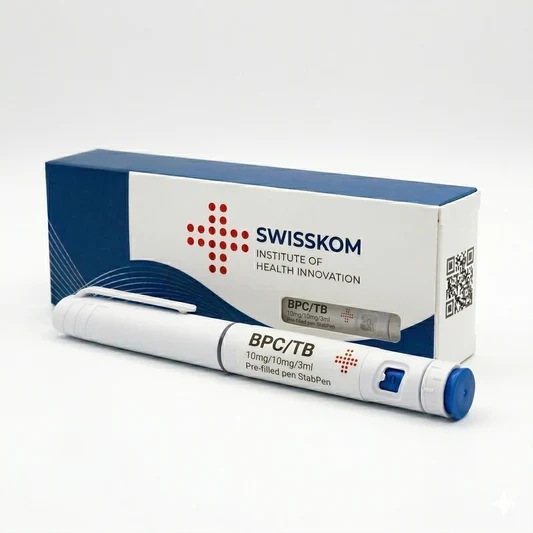
BPC-157 + TB-500 (Blend) | 5mg+5mg/10mg+10mg
A two-way compound for tissue repair. Synergistic angiogenesis and anti-inflammatory activity.
- 5mg
- 10mg
- StabPen™
- ≥99% Pure
Usual priceFrom €89,00Usual pricePEPTIDES FOR LONGEVITY
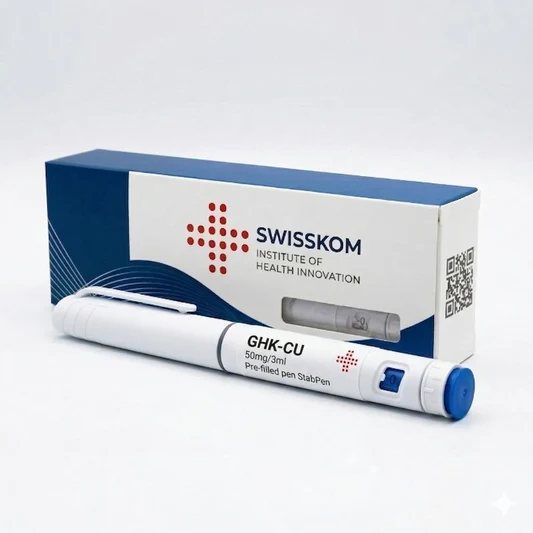
GHK-Cu | 50mg/100mg
A copper tripeptide compound. Study of gene expression and tissue remodeling.
- 50mg
- 100mg
- StabPen™
- ≥99% Pure
Usual priceFrom €39,00Usual priceMETABOLITIC PEPTIDES
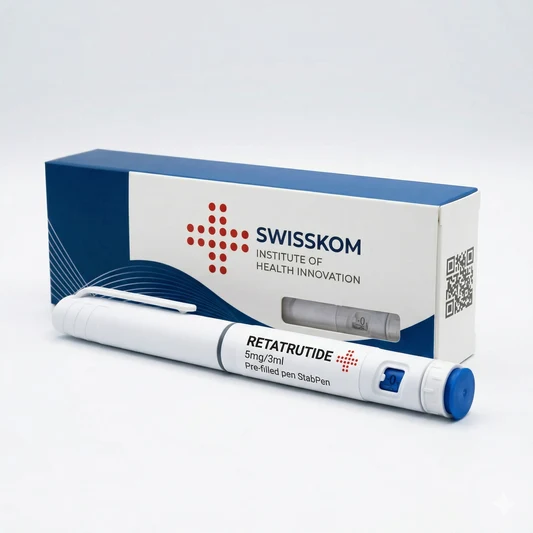
Retatrutide (Retatrutide) | 5mg/10mg/15mg/20mg
Triple receptor agonist. GLP-1/GIP/Glucagon. The most powerful incretin research compound.
- 5mg
- 10mg
- 15mg
- StabPen™
- ≥99% Pure
Usual priceFrom €109,00Usual price
DISCLAIMER
This product is intended for in vitro research and laboratory use by qualified professionals only. It is not approved for use in humans or animals, is not a drug, and has not been evaluated by a regulatory authority. Swisskom Institute of Health Innovation makes no therapeutic claims. By purchasing, you confirm that you are a qualified researcher and will use this compound only for legitimate scientific research.